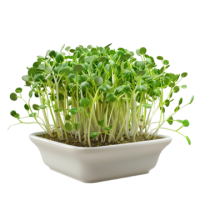
- ⭐🌱Question: What are microgreens ?
Answer: Microgreens are young seedlings of various vegetables. They are harvested 10 to 25 days after germination and are grown specifically for consumption. - ⭐🌱Question: What do microgreens look like ?
Answer: After germination of any grain or seed, a stem and two small leaves develop. These young plants usually grow to about 1 to 5–6 inches in height. - ⭐🌱Question: How many types of microgreens are there ?
Answer: There is no fixed number of microgreens. However, it is estimated that there can be approximately 1,200 to 1,500 varieties. - ⭐🌱Question: What nutrients do microgreens contain ?
Answer: Microgreens are rich in nutrients. They contain a high amount of vitamins such as A, B1, B2, B6, C, E, and K, along with plenty of antioxidants. They also contain iron, calcium, zinc,
potassium, sodium, phytochemicals, and many other beneficial compounds. - ⭐🌱Question: How can we use microgreens ?
Answer: The biggest advantage of microgreens is that they do not require any cooking. They can be consumed directly by using them in salads, juices, chutneys, or by sprinkling them over any dish. - ⭐🌱Question: What benefits do we get from consuming microgreens ?
Answer: Microgreens are extremely rich in nutrients, which help boost immunity, maintain good eyesight, reduce pain, support kidney and liver health, lower cholesterol, improve digestion, help manage body weight, and slow down signs of aging. They also help control diabetes and keep the body healthier against serious diseases like cancer.
In short, microgreens are a true superfood for our health. Keeping future generations in mind, we should easily and gradually include microgreens in our daily diet.